How to Get to Windsor Racecourse: Travel Guide by Train, Car and Bus
Best Horse Racing Betting Sites – Bet on Horse Racing in 2026
Loading...
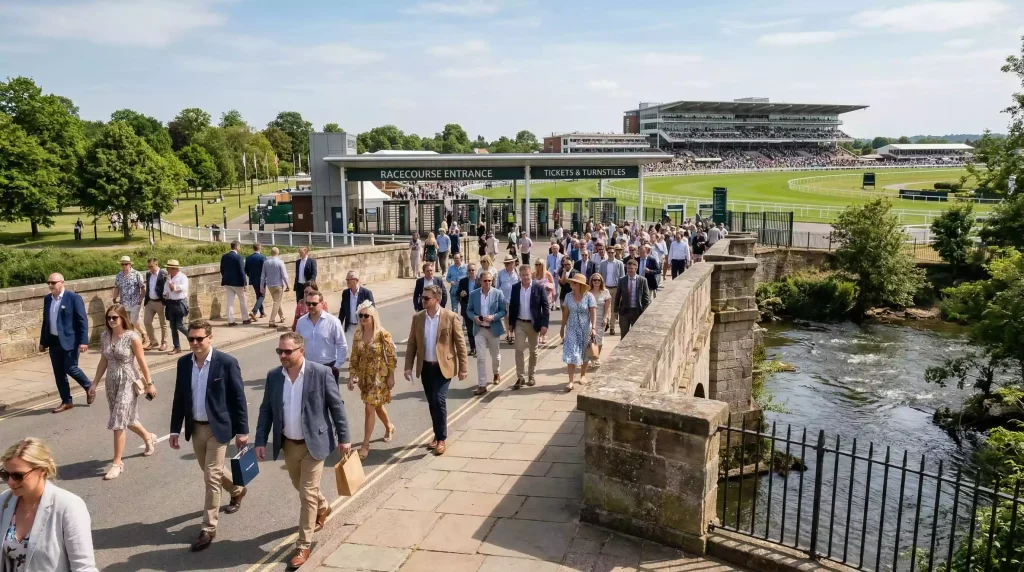
Royal Windsor Racecourse sits on an island — literally. The course occupies 165 acres between two channels of the Thames in the centre of Windsor, Berkshire, which means it does not have the sprawling car parks and open approaches typical of countryside racecourses. Getting there requires a degree of planning, particularly on busy meeting days when local roads congest and car parks fill early. Plan the trip, not just the bet — because arriving flustered ten minutes before the first race is no way to start an evening at the track.
This guide covers the main routes by train, car, and bus, plus parking options, taxi logistics, and accessibility information for visitors with specific needs.
By Train: London Waterloo to Windsor
The most straightforward route from London is the South Western Railway service from London Waterloo to Windsor and Eton Riverside. The journey takes approximately fifty-five minutes and runs directly into Windsor, with the station located a short walk from the racecourse entrance. On Monday Night Racing evenings, this is the most popular route for London-based visitors, and trains are correspondingly busier than usual — particularly the services departing Waterloo between 4 PM and 5 PM. Return services run late enough to catch the last race and still make it back to central London before midnight.
An alternative route runs from London Paddington via Slough to Windsor and Eton Central. This involves a change at Slough onto the branch line, adding a few minutes to the journey but offering a different departure point for those based in west London or arriving from the west. Windsor and Eton Central is marginally further from the racecourse than Riverside, but the difference is negligible — both stations are within a ten-to-fifteen-minute walk of the entrance. The Paddington route also connects to the Elizabeth Line, which provides cross-London connectivity from stations including Liverpool Street, Canary Wharf, and Stratford — useful for visitors from east London who would otherwise need to cross to Waterloo first.
For those travelling from outside London, the M4 corridor provides rail connections through Slough and Reading, both of which offer onward services to Windsor. Reading to Slough is quick, and the Slough-to-Windsor branch line adds approximately five minutes. Visitors from the Midlands or the West Country can reach Slough or Reading via Great Western Railway, making the transfer straightforward. The key consideration for all train travellers is timing: on race days, the return journey can be crowded, and allowing a buffer between the last race and the intended train avoids the crush of everyone leaving simultaneously.
By Car: M4 and Parking
The primary driving route is via the M4, exiting at Junction 6 and following signs to Windsor town centre. The racecourse is signposted from the main roads, though on race days the final mile through Windsor’s town-centre streets can be slow, particularly during the pre-meeting rush. Allow an additional twenty to thirty minutes beyond the normal driving time for the last section on busy evenings.
On-site parking is available but limited, and charges apply. The racecourse car park fills early on popular meetings — themed Monday nights and feature fixtures are the worst — so arriving at least an hour before the first race is advisable if you want a space close to the entrance. Overflow parking is sometimes available in nearby fields or council car parks, with stewards directing traffic on the approaches. The racecourse website typically confirms parking arrangements before each meeting, and pre-booking may be available for certain fixtures.
Town-centre car parks in Windsor offer an alternative, though they come with a longer walk and the risk of restricted evening hours. Some car parks close before the last race, which can create an unpleasant surprise for anyone who assumed they would be open late. Checking closing times is essential if you park in the town rather than at the course. The River Street and King Edward VII car parks are the closest to the course, but both operate under council-managed hours that may not align with evening race times. For groups, a taxi or ride-share from a slightly more distant car park is often more practical than circling the town centre looking for a space. On the busiest race nights, the pragmatic choice is often to park further out and walk — fifteen minutes on foot from the station end of town is a reasonable trade-off for avoiding the car park lottery.
By Bus and Taxi
Local bus services connect Windsor with surrounding towns including Slough, Maidenhead, and Bracknell. The bus stop closest to the racecourse is on the main road adjacent to the entrance, though services are infrequent during the evening and should not be relied on for return journeys after the last race. First Bus and Arriva operate the main routes, with services from Slough running most frequently. Bus is a viable option for getting there but rarely practical for getting home, particularly on Monday evenings when the last race finishes after 8:30 PM and the bus timetable has thinned to one service an hour or less.
Taxis are available from a rank near Windsor and Eton Riverside station and from the town centre. On race evenings, demand spikes after the last race, and wait times can extend to twenty minutes or more. Booking a taxi in advance for the return journey — either through a local firm or via a ride-hailing app — is the most reliable option. The racecourse is approximately ten minutes by taxi from Slough station, which provides a useful fallback if the direct train to Windsor is disrupted. Uber and similar apps operate in the area, though surge pricing after the final race can push fares above the normal rate.
Accessibility and Special Needs
Windsor Racecourse provides wheelchair access across its main areas, including the enclosures, viewing platforms, and hospitality facilities. Accessible parking is available close to the entrance for badge holders, and the course offers companion policies for visitors who require a carer. Induction loops are fitted in certain areas, and specific accessible viewing positions are available by prior arrangement — contacting the racecourse in advance ensures the best experience.
The course’s family-friendly profile is reflected in the broader industry data: across British racing in 2026, attendance by under-18s reached 211,447 — a 17% increase on the previous year. Windsor contributes to that trend through its themed Monday evenings, which include children’s entertainment on selected dates, and through its growing winter programme, which adds new opportunities for family visits outside the traditional summer season. Kim Bailey, a licensed trainer familiar with the course, has highlighted Windsor’s accessibility: “The racecourse is very popular, and for most visitors it is easier to get to than Lingfield. Monday evening meetings attract big crowds, and I think jump racing will be popular too,”
Bailey told The Owner Breeder. That crowd profile includes families alongside the core racing audience.
For visitors with mobility challenges, the island location means that all access routes cross a bridge — either the main road bridge from Windsor town or the pedestrian approach from the station side. Both are step-free, but the gradient may require assistance for wheelchair users. Arriving early avoids the congestion at the bridge approaches that builds in the final thirty minutes before the first race. Plan the trip, and the racecourse itself is welcoming enough once you are through the gate.