
Windsor Race Results: The Complete Guide to Royal Windsor Racecourse
 Available in US
Every finish. Every furlong. The full picture.
Windsor in Five Numbers: What the Results Actually Tell You
- Windsor's figure-of-eight layout creates measurable draw and pace biases that differ by distance — front-runners win at roughly four times the rate of hold-up horses across all trips.
- The Winter Hill Stakes (Group 3, £70,000) is the flagship flat event; stall one has produced five winners in thirteen years, making draw data essential reading before any ante-post position.
- Jump racing returned in December 2024 after a 20-year absence; the Berkshire Winter Million (£1.25 million, January 2026) is now Windsor's anchor winter festival.
- British racing's total attendance topped 5 million in 2025 for the first time since 2019, while prize money hit a record £194.7 million — but the active horse population fell 2.3% to 21,728.
- Windsor stages 26 fixtures per year across both codes, including 13 consecutive Monday Night Racing evenings from April through September.
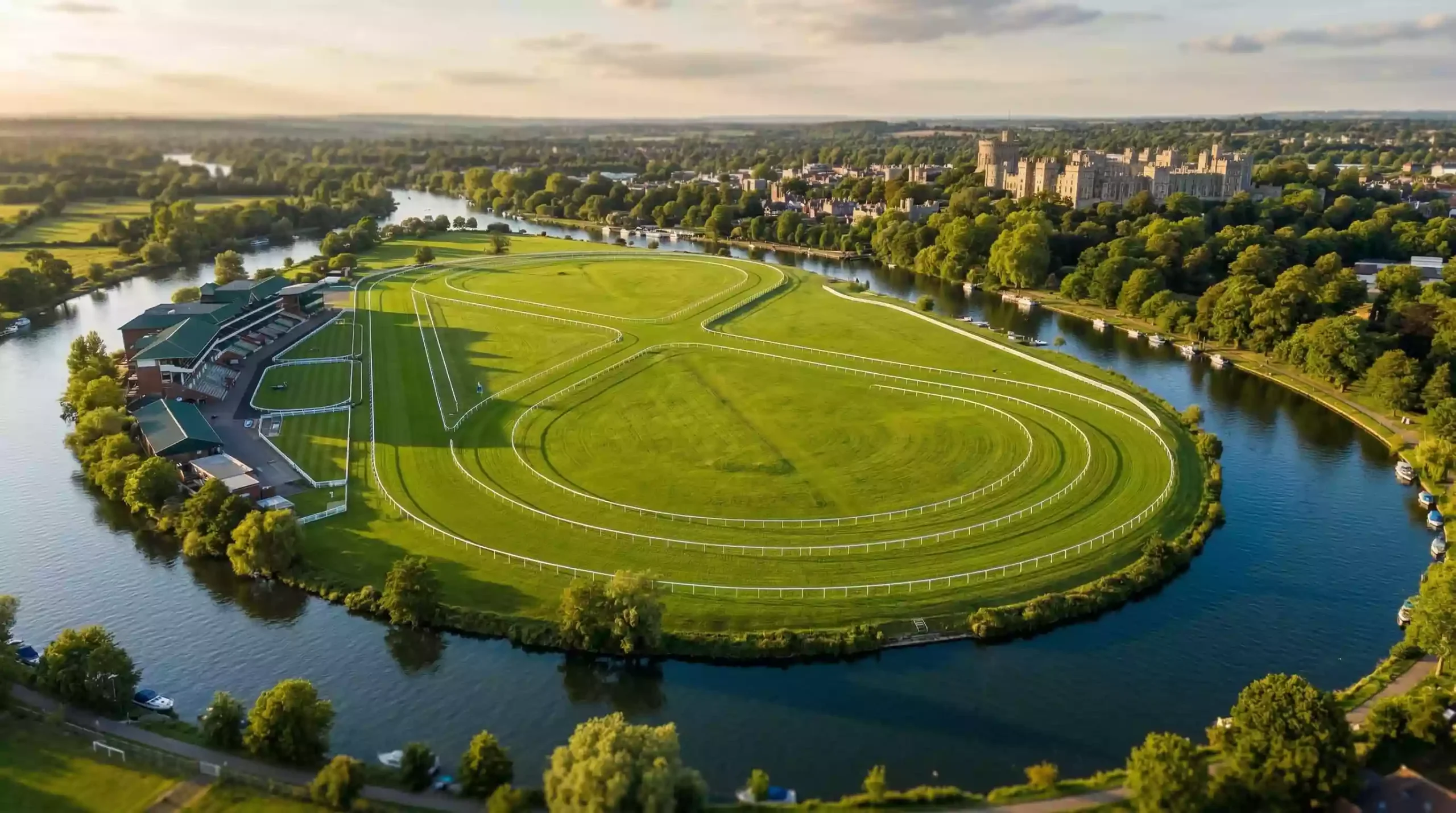
There is exactly one racecourse in Britain built on its own island, and its windsor race results read unlike anything you will find at a conventional oval track. Royal Windsor Racecourse sits on 165 acres of Thames-side parkland in Berkshire, separated from the town by water on every side, running a figure-of-eight configuration that shares company only with Fontwell Park in the entire country. That layout is not a piece of trivia for the course brochure. It shapes finishes, distorts draw statistics and rewards a particular kind of horse — the sort that can handle direction changes, an elbow three furlongs from home and a five-furlong home straight that looks deceptively simple until the ground turns soft.
Understanding windsor racecourse results means understanding context that most result aggregators strip away. A bare finishing order tells you who crossed the line first; it does not tell you that pace bias at Windsor runs roughly four times in favour of front-runners, or that stall one in the Winter Hill Stakes has won five of the last thirteen renewals. It does not tell you that National Hunt racing returned here in December 2024 for the first time in two decades, or that the Berkshire Winter Million now offers a combined prize fund of £1.25 million across three days of jump action.
This guide is built to close that gap. Every finish, every furlong — from the sprint distances run on a near-straight course to the right-hand-only bends of the mile trips, from the Monday evening cards that draw casual racegoers by the thousand to the Group 3 Winter Hill Stakes that attracts some of the sharpest middle-distance form in the calendar. What follows is a course-level analysis designed to make Windsor's results mean something beyond a list of names and prices.
The Course: 165 Acres on an Island
Royal Windsor Racecourse occupies a position unique in British racing — literally. The course sits on its own 165-acre island in Berkshire, flanked by the Thames on both sides, with the castle visible from the stands on a clear day. No other racecourse in the country can make that claim. The island setting is not merely scenic; the proximity to the river influences drainage, going reports and the overall character of the turf in ways that matter when you are trying to decode results.
The course is operated by Arena Racing Company (ARC), the largest racecourse operator in Britain. ARC runs 16 venues accounting for roughly 39% of all fixtures nationally and drawing around 1.2 million spectators per year across its portfolio. ARC is also a shareholder in Sky Sports Racing, the dedicated channel reaching approximately 14 million UK households — meaning Windsor's races receive regular broadcast coverage as part of the network. Windsor holds a particular status within that network: it was elevated to ARC's Venues of Excellence programme in 2024, a designation that brought with it investment in facilities, a new Executive Director — Jimmy Wallace — and a strategic push to broaden the course's appeal beyond its traditional flat racing base.
That push led to the most significant change in Windsor's recent history. In December 2024, National Hunt racing returned to the course for the first time in roughly two decades — regular jump fixtures had ceased back in 1998. The comeback was marked by Ma Shantou's victory under Harry Cobden for trainer Emma Lavelle on 15 December 2024, the first jump winner at Windsor in over 20 years. The initial season used a left-hand oval configuration, but from November 2025 the course reverted to its traditional figure-of-eight layout for jump racing, with a safety factor of 16 applied to all National Hunt races.
"We were delighted to bring jump racing back in 2024. After three fixtures we received plenty of positive and constructive feedback. We hope that reverting to the figure-of-eight will allow Windsor to continue offering competitive jump racing" — Mark Spincer, Managing Director (Racing Division), Arena Racing Company.
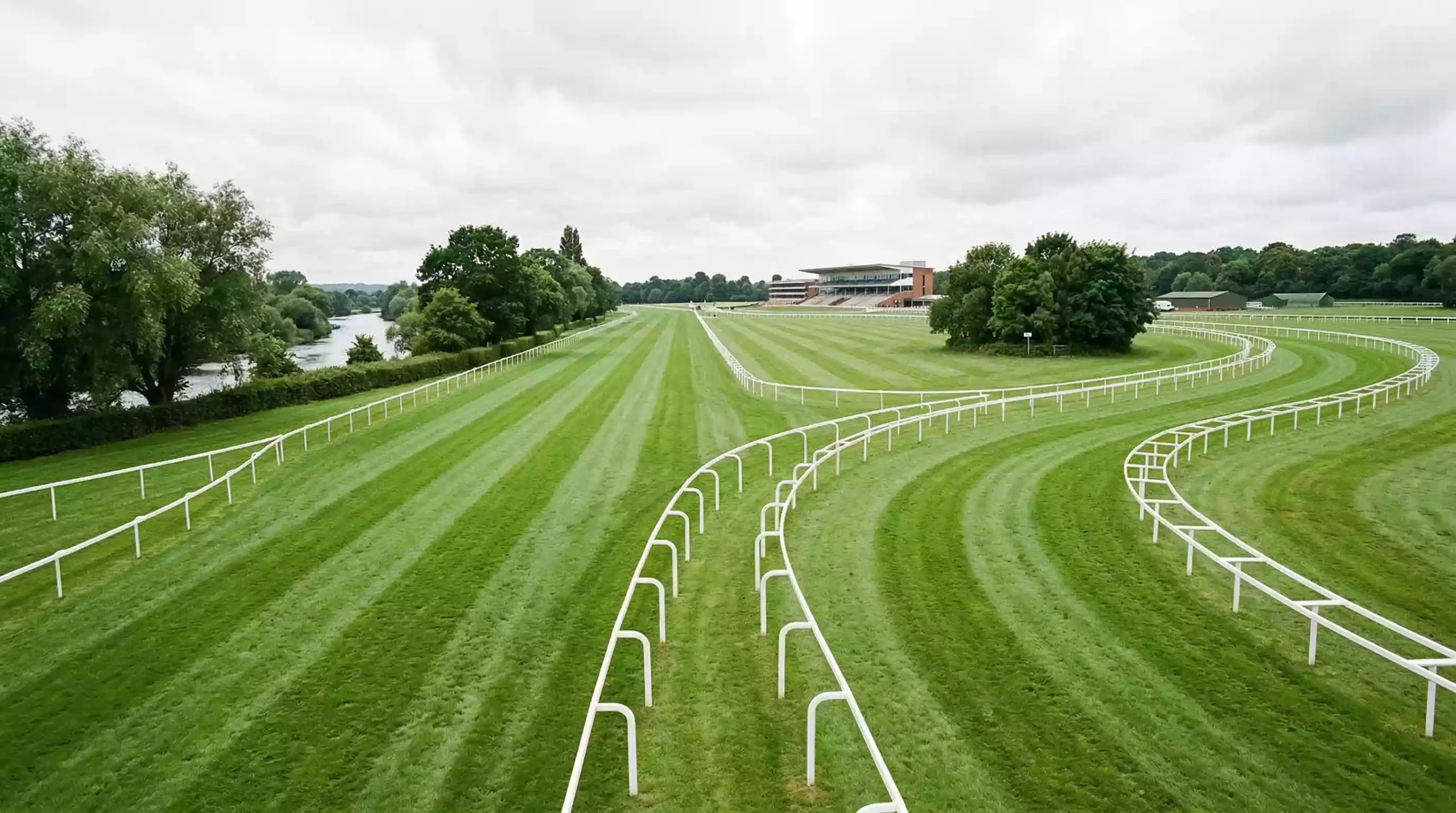
A full circuit of the figure-of-eight measures just over one mile and four furlongs, but describing it as a single loop misses the point entirely. The track crosses itself, meaning horses racing over different distances encounter fundamentally different geometry. Sprinters on six furlongs run a near-straight course. Middle-distance runners on a mile to a mile and three furlongs and 99 yards navigate only right-hand bends. The crossover section, with its slight camber changes, adds a dimension of unpredictability that flat, oval courses simply do not possess.
ARC invested in new drainage infrastructure and previously unused grassed areas of the racecourse to support the jump programme, a project announced in 2023 by ARC's media centre. The investment was not cosmetic. Windsor's Thames-side position had always given it naturally good drainage — a point Spincer himself has made publicly — but adding jump obstacles across a figure-of-eight requires ground that can absorb significantly more punishment than a flat-only card demands. That groundwork is now what enables Windsor to sustain a dual-code calendar: 26 fixtures per year spanning both flat and jump racing, a density unusual for a course of its size.
For anyone studying windsor horse racing results, the implication is clear. This is no longer a flat-only venue with a predictable summer schedule. The results now span two codes, two track configurations and a wider spread of form than at any point in the course's modern history. Reading those results without understanding the course itself — its geography, its ownership, its ongoing transformation — is reading them blind.
Dutching Engine
Decoding the Figure-of-Eight: A Distance-by-Distance Map
A distance-by-distance breakdown of Windsor's figure-of-eight is essential for anyone who wants to move beyond headline results and into the mechanics of how races are won here. The layout is unusual enough that treating all distances as equivalent — the way you might at Ascot or Newbury — will lead to flawed conclusions. Each trip uses a different portion of the track, with different geometry, different turning requirements and different implications for draw and running style.
Windsor Figure-of-Eight: Key Dimensions
Full circuit: approximately 1 mile 4 furlongs. Home straight: 5 furlongs, with a noticeable elbow (slight bend) roughly 3 furlongs from the finish. The track crosses itself near the midpoint of the circuit, creating distinct routes for each race distance.
Sprint Distances: 5f and 6f
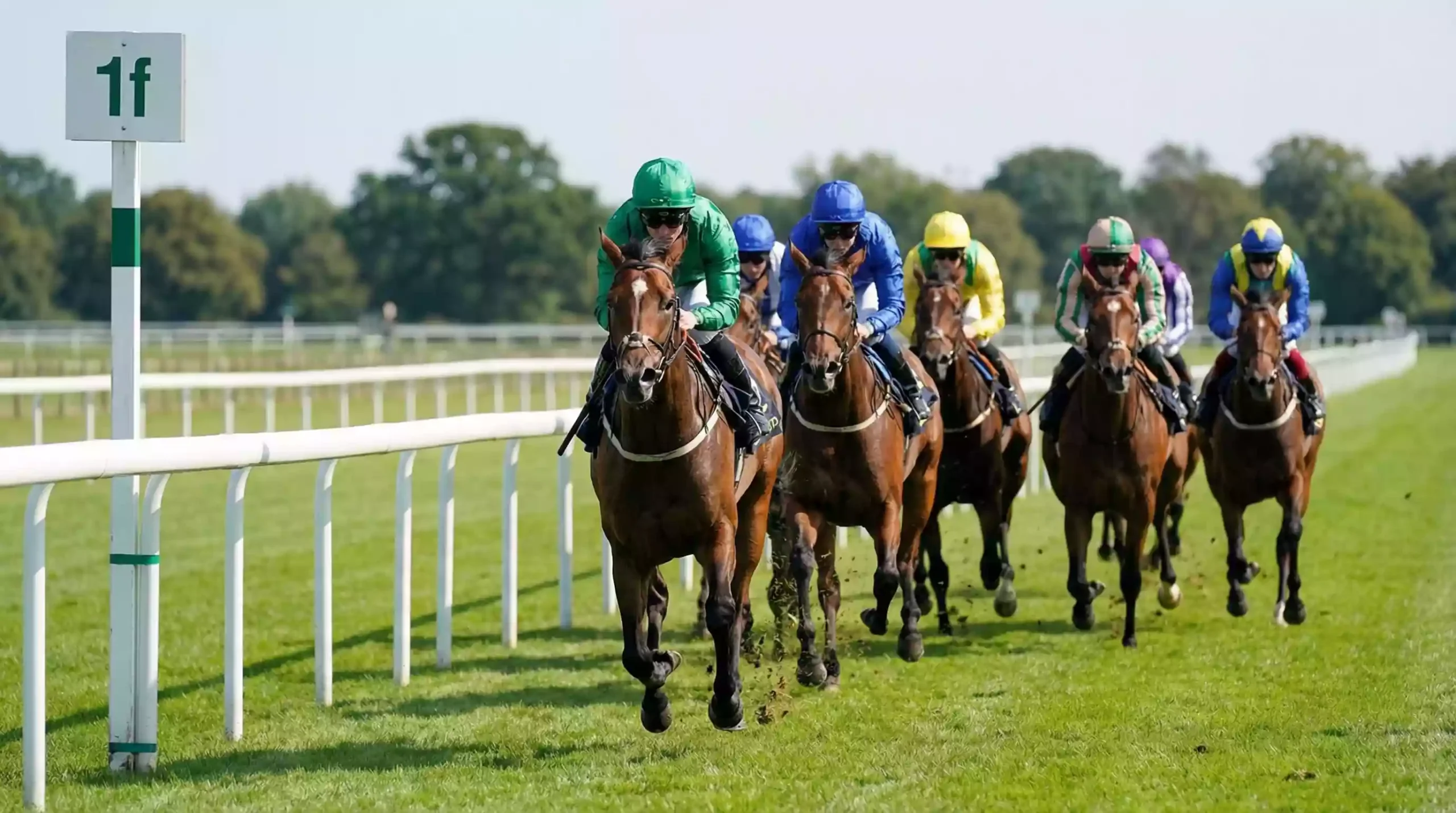
The six-furlong trip at Windsor is run on what amounts to a near-straight course. Runners break from the stalls and head towards the finish with barely any curvature to negotiate. This is significant because it isolates raw speed and stall position as the dominant variables — there is no bend advantage, no tactical positioning through a turn, no opportunity for a jockey to save ground on the rail around a corner. The five-furlong sprint is similarly configured, forming the final portion of the same straight stretch.
The practical consequence for results analysis is straightforward: on sprint distances, draw data and pace figure carry more weight than on any other trip at the course. When the ground turns soft, high-numbered stalls — those drawn towards the far side — have a measurable advantage at six furlongs, a pattern we will examine in the draw bias section below. On good ground, the bias diminishes to near-negligible levels, but it never disappears entirely.
Middle Distances: 1m, 1m2f, 1m3f99y
Here is where the figure-of-eight starts to matter in ways that most result tables will never show you. Races at one mile, one mile and two furlongs, and the quirky one mile three furlongs and 99 yards all share a common feature: runners turn only to the right. There are no left-hand bends on these trips. The entire route sweeps rightwards through the figure-of-eight's upper loop before feeding into the home straight.
The home straight itself stretches a full five furlongs — unusually long for a course of this circumference. That length is both a blessing and a trap. It gives front-runners room to dictate the pace without facing a sharp turn that might allow closers to pounce. But it also contains a subtle feature that catches out the unprepared: an elbow, a gentle but definite change of direction, located approximately three furlongs from the winning post. The elbow is not a full bend. It is a slight kink, enough to unbalance a horse drifting wide or to cost a length to a runner that does not handle the shift in camber. At middle distances, the horses have been turning right throughout, so the elbow — which runs in the same direction — typically does not cause problems for those already on the rail. But a horse drawn wide and racing wide through the loop often finds itself wide again at the elbow, compounding the disadvantage.
This is why low stall numbers at middle distances tend to correlate with better results, and why the Winter Hill Stakes — run over one mile and two furlongs — has historically favoured stall one to a statistically unusual degree. The geometry funnels rail-runners through the bends and through the elbow with the shortest possible route, while wide runners are on the outside of every rightward turn from start to finish.
Longer Flat and Jump Distances
Races beyond a mile and three furlongs engage more of the figure-of-eight circuit, introducing the crossover section where horses encounter brief transitions between right-hand and left-hand curvature. For jump racing — which returned to the full figure-of-eight from November 2025 — this crossover adds a further dimension. Horses must jump obstacles while adjusting to changes in lead leg, a physical demand that the course's senior veterinary surgeon, Clive Hamblin, has argued actually benefits equine welfare by improving stride balance.
The bottom line for result interpretation is that Windsor is not one course but several, depending on the distance. A horse that excels at six furlongs here — on the straight, in a pure speed test — is facing an entirely different challenge at a mile and two furlongs, where turning bias, rail position and the elbow all become factors. Lumping all windsor racing results into a single form profile without accounting for distance is one of the most common errors in casual analysis of this course.
Draw Bias and Pace: Why Position Matters at Windsor
If there is one piece of data that separates informed analysis of windsor race results from casual browsing, it is the interaction between draw, pace and going at this course. Windsor's figure-of-eight creates biases that are both real and measurable — but they shift depending on the distance, the ground conditions and, above all, the running style of the horses in the field. Treating draw as the only variable, the way some tipsters do, misses the bigger picture.
Draw Bias by Distance
On sprint distances — five and six furlongs — the course runs virtually straight, so the draw operates differently from courses with a bend into the straight. On soft ground at these distances, high-numbered stalls (drawn towards the far side of the track) carry an advantage. The rail on the stands side can become slower when the going deteriorates, pushing the faster strip of turf towards the far rail. On good to firm going, the bias flattens out — there is still a marginal preference, but it is rarely decisive on its own.
At middle distances, the picture inverts. Races of one mile and upwards involve right-hand bends throughout, meaning low stalls — those closest to the inside rail — give a positional advantage that persists through the turns and into the five-furlong home straight. The data from FlatStats, covering Windsor results from 2015 to 2025 with a minimum threshold of ten runners, confirms the trend: on six furlongs there is a slight edge towards higher stall numbers, while on a mile and above the advantage tilts to the lower end.
Pace Bias: The Dominant Factor
Draw matters at Windsor, but pace matters more. Across all distances, data from the past decade shows that approximately four times as many winners come from horses that race prominently — leading or close to the pace — than from those held up at the rear. That ratio is unusually high by British flat racing standards. Many courses show a mild front-runner bias; Windsor shows a pronounced one.
The explanation lies in the home straight. At five furlongs, it is long enough to reward a horse that takes the lead early and maintains an honest gallop. There is no sharp turn at the two-furlong pole to compress the field and give closers a slingshot; the elbow at three furlongs out is too gentle to cause significant bunching. A front-runner that hits the elbow with a clear lead and a straight run home has very little reason to stop. Closers, by contrast, face a long pursuit with no tactical corner to exploit.
The implication for reading Windsor results is practical. When you see a horse win at this course having made the running, do not assume it was a fluke or a weak field allowing an easy lead. The track configuration actively rewards that style. Conversely, a horse beaten into third or fourth having been held up at the back may have been running a better race than the bare result suggests — it was fighting the track's inherent bias as much as the opposition.
The Winter Hill Stakes Draw Anomaly
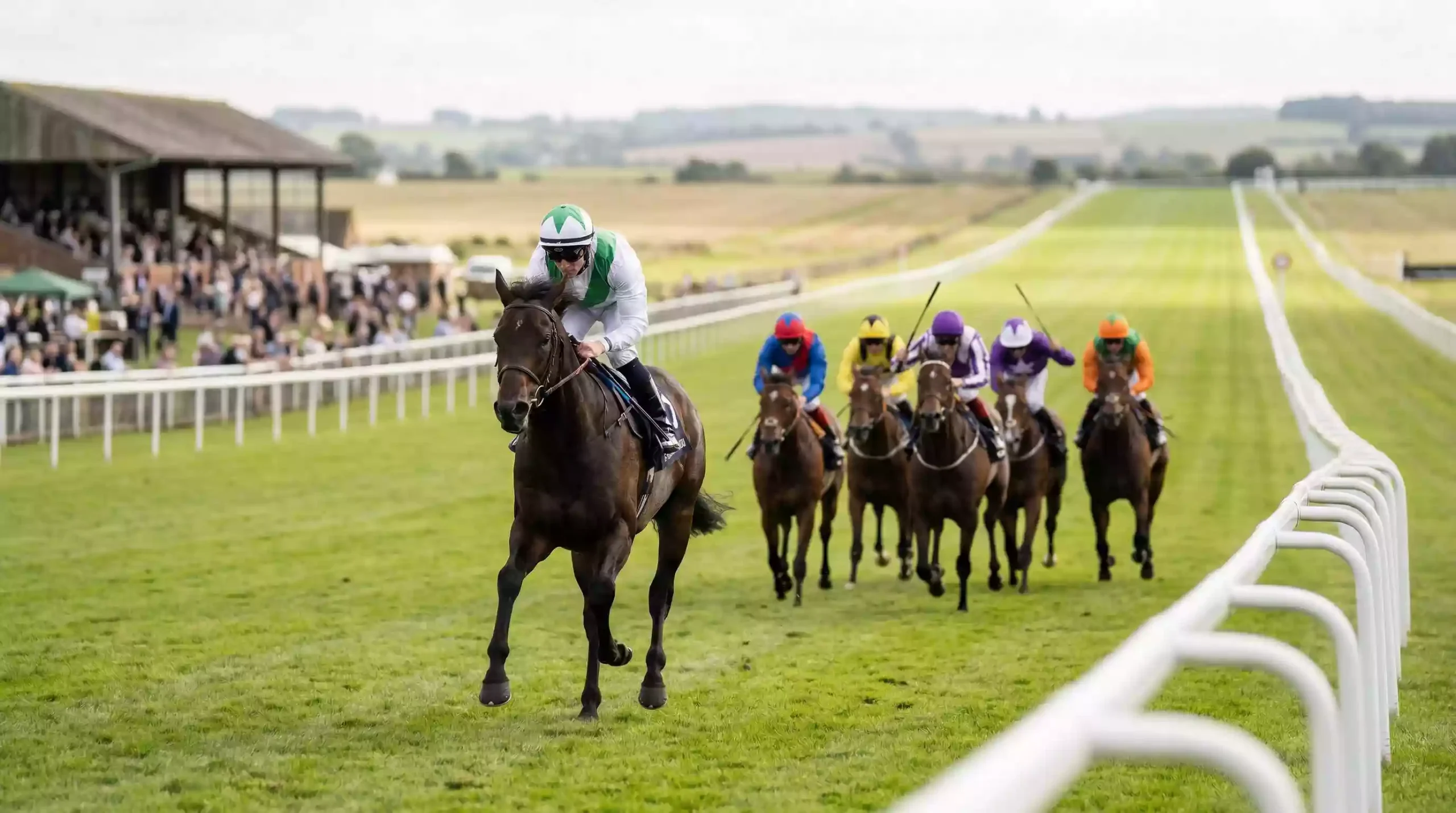
The intersection of draw and pace bias reaches its most extreme expression in Windsor's flagship flat race. In the Winter Hill Stakes, stall one has produced five winners in the last thirteen renewals. Stall two adds another two victories, meaning the lowest two stalls account for more than half of all winners over that period. For a Group 3 race with fields typically numbering between six and ten runners, that concentration in the inside draw is striking — and it is consistent with the course geometry we have described. At one mile and two furlongs, the horse in stall one has the shortest route through every right-hand bend and through the elbow, an advantage that small fields cannot dilute through pace chaos or traffic problems.
None of this means you should blindly back stall one in every Windsor race. What it means is that when interpreting royal windsor racecourse results, draw and pace data deserve as much attention as the form of the horses themselves. The track is not neutral. It has a voice in every result, and ignoring that voice is a good way to misread the form.
Flagship Races: Winter Hill Stakes, Sprint Series and Beyond
Track bias tells you how to weight a result; the race itself tells you what that result is worth. Windsor's race programme spans the spectrum from Class 5 novice stakes to a Group 3 that has attracted some of the finest middle-distance horses trained in Britain over the past half-century. Understanding which races anchor the calendar — and what their results historically reveal — is essential context for anyone following windsor racecourse results beyond the occasional glance at a Monday evening card.
Winter Hill Stakes: The Group 3 Standard-Bearer
The Winter Hill Stakes is Windsor's only Pattern race and has been a fixture of the British calendar since 1975. It was elevated to Group 3 status in 1995 and is run over one mile and two furlongs on the flat, typically in late August. The 2025 prize fund stood at £70,000 — a rise of £10,000 on the 2023 figure — with the winner collecting £39,697.
The race has been shaped by a small number of dominant connections. Sir Michael Stoute holds the record for most victories as a trainer with 10 wins. Saeed bin Suroor follows on eight. Among jockeys, Frankie Dettori tops the list with five victories, a tally that reflects a career-long affinity for Windsor's right-hand bends on this trip. The course record was set by Al Kazeem in 2014, clocking 2:01.62 — a time that still stands as the benchmark for the race's 50-year history.
What makes the Winter Hill particularly interesting from a results-analysis perspective is its draw bias pattern, which we covered in the previous section. The dominance of low stalls in a Group 3 context provides a rare example of track geometry influencing Pattern-level outcomes in a way that many other courses do not exhibit as clearly.
Fitzdares Sprint Series: Ten Qualifiers, One Final
If the Winter Hill Stakes represents Windsor's prestige, the Fitzdares Sprint Series represents its grassroots competitiveness. The format is straightforward and compelling: ten qualifying races staged across the flat season, ranging from Class 2 (£30,000 prize fund) down to Class 4 (£10,800), run over five and six furlongs. The ten qualifiers feed into a final in August worth £75,000 — a substantial purse for a race that builds its field through performance on the same course over the preceding months.
The series rewards course specialists. A horse that qualifies through multiple Windsor sprints is, by definition, a horse that handles the near-straight sprint configuration, the specific ground conditions and the pace bias that favours front-runners. The final, therefore, tends to produce a form test that is unusually course-specific — more so than most handicap finals, which draw runners from a variety of tracks. For anyone tracking Windsor results over the flat season, the Sprint Series qualifiers provide a thread of form that connects individual cards into a season-long narrative.
Jump Racing: The New Chapter
The return of National Hunt racing in December 2024 added an entirely new category of results to Windsor's output. Ma Shantou, trained by Emma Lavelle and ridden by Harry Cobden, became the first jump winner at the course in over 20 years when scoring on 15 December 2024 — a moment that felt symbolic of a broader shift in how the course sees itself.
"This is seriously good news for National Hunt racing. I remember when they used to run steeplechases there. The ability to provide good ground during winter is a real advantage" — Nicky Henderson, six-time champion trainer, commenting on the return of jump racing at Windsor.
That jump programme expanded rapidly. Within weeks, the Berkshire Winter Million — a three-day festival run in partnership with Ascot — was staged at Windsor in January 2025, attracting 13,170 spectators and distributing £1.2 million in prize money. By January 2026, the prize fund had risen to £1.25 million, establishing BWM as a genuine early-season fixture on the National Hunt calendar. The headline result from the inaugural edition was Protektorat's 23-length demolition in the Fitzdares Fleur de Lys Chase under Harry Skelton — a winning margin that underlined the quality of horse willing to race at Windsor once the jumps infrastructure was in place.
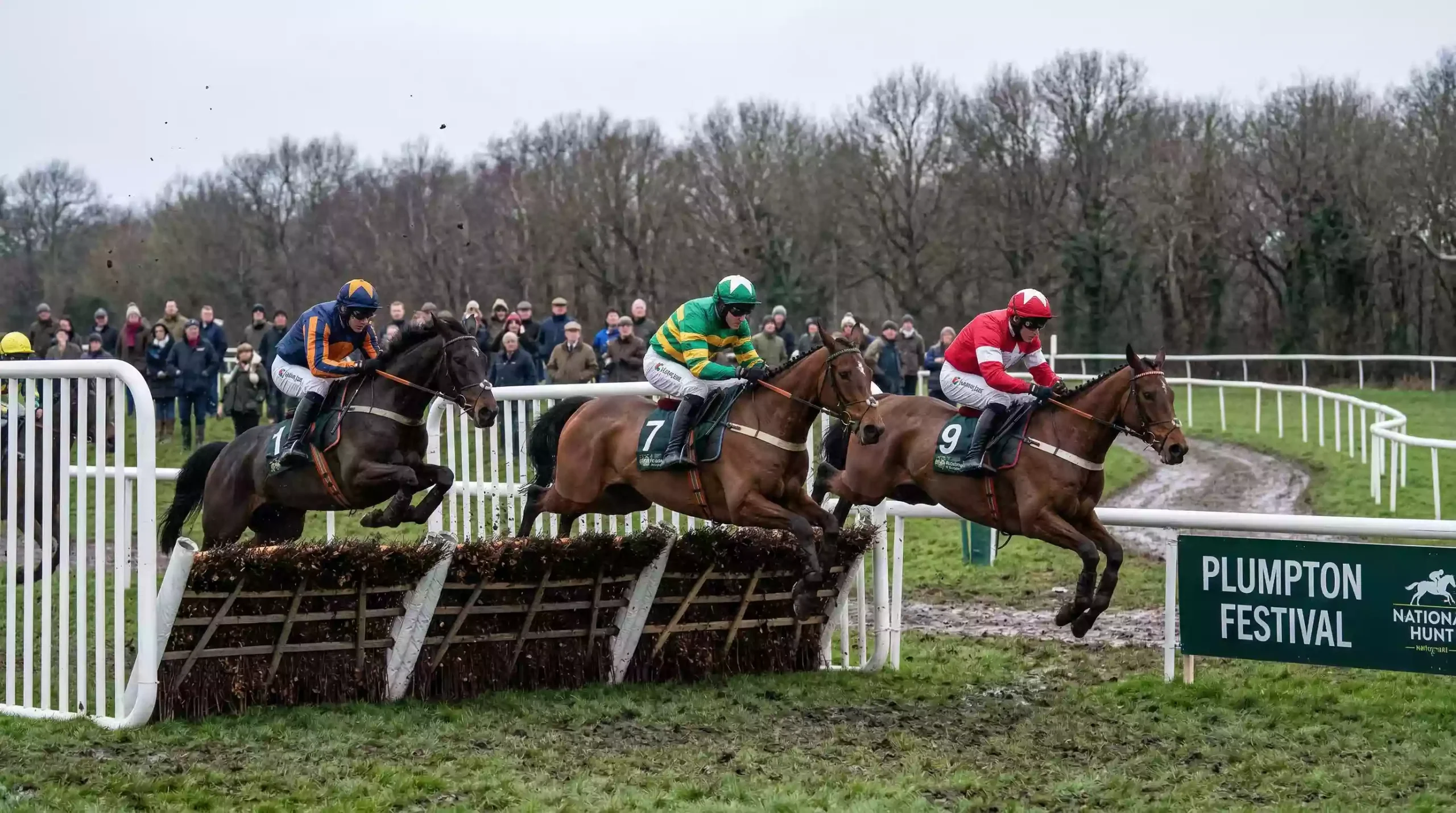
For results watchers, the jump dimension adds complexity. Windsor's jump form is still in its infancy — there are only a handful of fixtures to reference — but the early indications are that the figure-of-eight's demand on stride balance and directional change will create a distinctive form profile over time, distinct from what you see at conventional left-handed or right-handed jump tracks.
2026 Fixture Calendar: From Berkshire Winter Million to Monday Night Racing
Windsor's 2026 calendar marks the most ambitious programme the course has staged in its modern era. With 26 fixtures spanning both flat and jump codes, the schedule runs from January through to December — the first time in decades that racing has been a year-round proposition on this island course. Understanding the calendar is not a matter of diary planning alone; it tells you which type of form to expect at different points of the year, which surfaces and going conditions are likely, and when the higher-class races cluster.
January: The Berkshire Winter Million
The year opens with Windsor's biggest statement — the Berkshire Winter Million, a three-day jump festival held on 16–18 January 2026 with a total prize fund of £1.25 million. Run jointly with Ascot, BWM has quickly established itself as one of the first marquee events of the National Hunt season. The inaugural edition in January 2025 drew 13,170 spectators across three days and produced headline results including Protektorat's dominant Fleur de Lys Chase and Secret Squirrel's Sovereign Hurdle victory under Nico de Boinville for trainer Hughie Morrison.
The festival was originally staged at Lingfield Park under the name The Winter Million before being relocated to Windsor in 2025 — a move that reflected both ARC's investment in Windsor's jump infrastructure and the commercial logic of staging a major winter festival within easier reach of London and the Thames Valley population.
April to September: Flat Season and Monday Night Racing
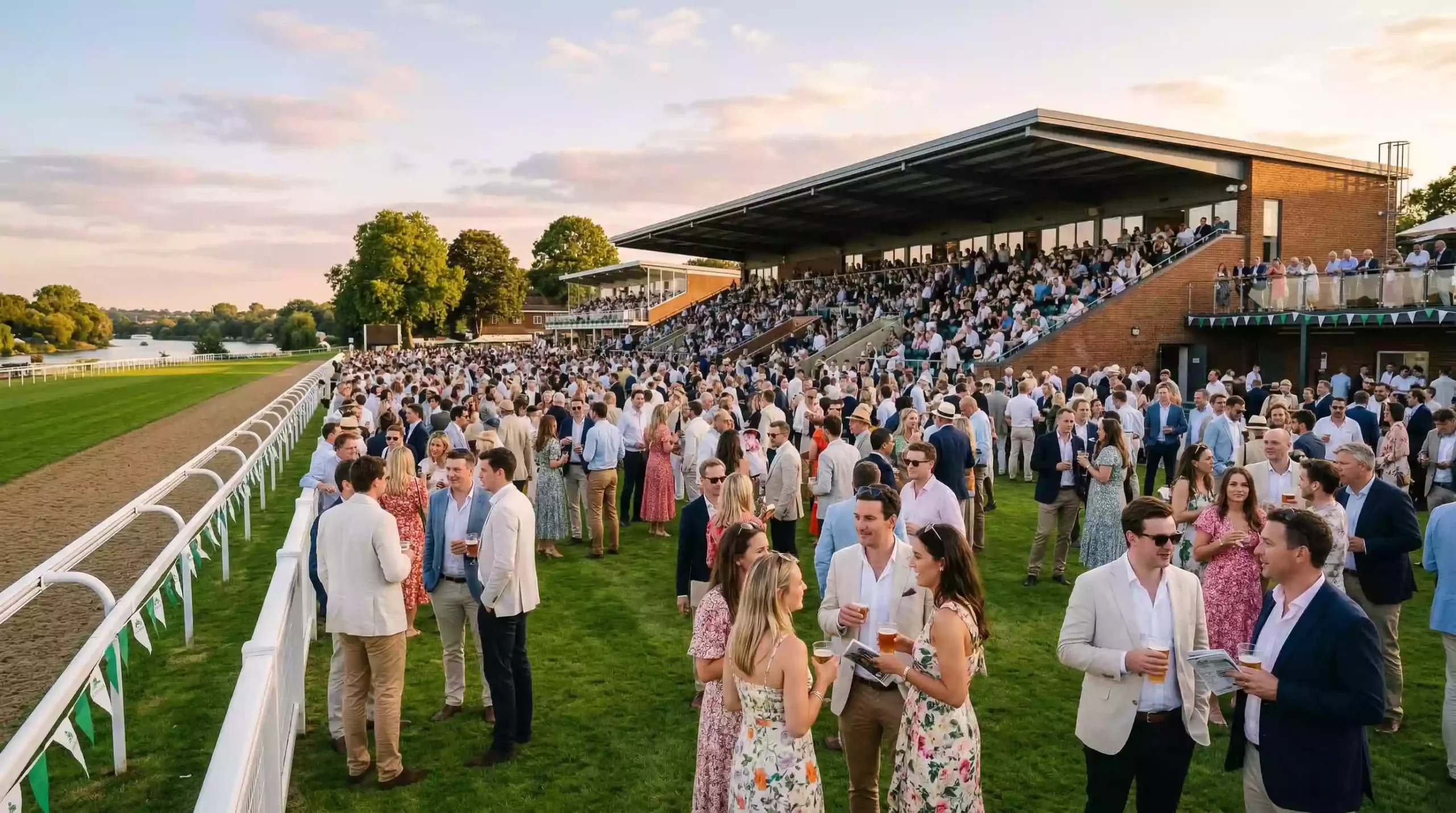
From April, the calendar shifts to flat racing and the sequence that defines Windsor's summer identity: 13 consecutive Monday Night Racing evenings. These are not minor fixtures. The Monday evening meetings have become a social institution in their own right, mixing competitive flat cards — typically featuring Class 3 to Class 5 handicaps plus stakes races — with themed entertainment nights running across the season. The first race is typically off at early evening, with the last race around dusk, creating an atmosphere that blends racing with outdoor leisure in a way that few courses outside of York or Chester manage to replicate.
Within the flat season, the headline dates are the Royal Windsor Stakes (Listed) in June, the Fitzdares Sprint Series qualifiers running from spring through summer, and the Winter Hill Stakes (Group 3) in late August. The Sprint Series final, also in August, carries a £75,000 purse and typically produces one of the most competitive fields of the season.
November to December: The Jump Return
From November, Windsor transitions back to National Hunt racing. Since the 2025/26 season, this means jump races run on the full figure-of-eight configuration with a safety factor of 16. The autumn fixtures typically feature novice hurdles, novice chases and handicap chases, with fields drawn from trainers in Berkshire, Hampshire and the wider south of England. December fixtures lead directly into the January BWM, creating a coherent winter block that did not exist prior to 2024.
2026 Key Dates at a Glance
January 1 — New Year's Day Racing (first time in approximately 30 years). January 16–18 — Berkshire Winter Million (£1.25m). April — Monday Night Racing season begins. June — Royal Windsor Stakes (Listed). August — Winter Hill Stakes (Group 3) and Sprint Series Final (£75,000). November — Jump season resumes on figure-of-eight.
The New Year's Day fixture is a notable addition for 2026 — Windsor has not raced on 1 January in roughly three decades. Its inclusion signals ARC's intent to keep the course active through the winter months, offering jump racing fans a fixture during a period traditionally dominated by a handful of established courses.
British Racing in 2025: The Numbers Behind the Results
Windsor's results do not exist in a vacuum. They are shaped by the economic and structural forces acting on British racing as a whole — forces that in 2025 told a story of genuine contradiction. Record crowds sat alongside a shrinking horse population. Prize money hit an all-time high while betting turnover continued to decline. To read Windsor's race cards and results intelligently, you need at least a working knowledge of these broader numbers.
Attendance: The Five Million Milestone
Total attendance at British racecourses in 2025 reached 5.031 million — the first time the figure has exceeded five million since 2019, representing a 4.8% increase on 2024. Average attendance per fixture rose 3.6% to 3,526. The recovery was not evenly distributed; the first half of 2025 saw 2.43 million spectators across 704 fixtures, a 5.1% rise year-on-year according to the Racecourse Association's figures, with the second quarter (April to June) particularly strong at 1.76 million, up 8.3%.
One of the more encouraging demographic signals came from younger racegoers. Attendance among spectators aged under 18 hit 211,447 in 2025, a 17% increase on the previous year. For a sport that has historically struggled with an ageing fan base, that figure matters — and courses like Windsor, with their Monday evening social format and proximity to London, are precisely the type of venue positioned to capture younger audiences.
Prize Money: A Record Year
British racing's total prize fund in 2025 reached a record £194.7 million, a 3.5% increase on 2024. The structure of that funding is worth understanding: racecourses themselves contributed £103.4 million (53% of the total), the Horserace Betting Levy Board (HBLB) contributed £63.2 million, and owners added £26.8 million. The HBLB's Levy income for 2024/25 was £109 million — the highest since the Levy reform of 2017 — and for 2026 the Board has committed an additional £4.4 million in prize money as part of a £77.1 million package.
"There is much for the sport to be proud of in 2025. Attendance is growing, prize money has increased at all levels. But the horse population continues to decline, and the betting environment remains challenging" — Richard Wayman, Director of Racing, British Horseracing Authority.
That assessment captures the tension precisely. For Windsor, rising prize money means better-quality fields in races like the Winter Hill Stakes and the Sprint Series. But the declining horse population threatens to pull in the opposite direction.
The Horse Population Problem
The number of horses in training in Britain during 2025 was 21,728 — a 2.3% decline on 2024, extending a trend of roughly 1.5% annual falls since 2022. The BHA projects that the number of race starts will fall by 6–7% by 2027 relative to 2024 levels. Fewer horses means smaller fields, which in turn means shorter-priced favourites, less competitive racing and reduced appeal for both racegoers and punters. At a venue like Windsor, where many fixtures are populated by Class 3 to Class 5 races with moderate field sizes, a further 6–7% contraction could push some cards below the threshold of meaningful competition.
Betting Turnover: The Declining Trend
Overall betting turnover on British racing fell 4.3% in 2025 compared to 2024, and by 10.3% compared to 2023. The drop was not uniform across fixture types: average turnover on Premier fixtures — the highest-tier race days — actually rose 1.1%, while Core fixture turnover fell 8.1%. Windsor's programme sits overwhelmingly in the Core category, which means the course is on the wrong side of that trend. The Monday evening meetings, which draw large on-course crowds, may partly offset the decline through on-course betting, but the structural shift towards fewer, larger-value bets concentrated on premium fixtures is a headwind that mid-tier courses feel more acutely than Ascot or Cheltenham.
The Macro Picture
At the broadest level, the British racing industry generates direct revenues exceeding £1.47 billion and contributes approximately £4.1 billion to the economy when induced effects are included, according to a House of Commons Library research briefing. The sector supports around 85,000 jobs. These figures provide context for why government and regulatory attention remains focused on the sport's health — and why courses like Windsor, sitting within the largest operator portfolio in the country, are seen as bellwethers for broader industry trends. The HBLB's Annual Report for 2024–25, laid before Parliament in December 2025, details the Levy's allocation across prize money, integrity, welfare and capital projects — the machinery that underpins every card run at Windsor and every other British course.
For the results analyst, the industry numbers provide essential framing. A strong finish in a well-funded Group 3 tells you something different about a horse than a similar finish in a poorly-subscribed Class 5 on a declining-turnover Monday night. The economics behind the race are part of the result.
Stories from the Stands: Windsor's Strangest Moments
Every racecourse accumulates its share of improbable stories, but Windsor — with its island setting, wartime history and occasional episodes of outright absurdity — has stockpiled more than most. These are not just trivia. They are reminders that horse racing, for all its data and analysis, remains a sport where the wildly unlikely happens with just enough regularity to keep everyone honest.
In 1944, during the Second World War, a German V1 flying bomb landed near the racecourse while horses were being prepared for a race meeting. Windsor was one of only three southern racecourses — alongside Newmarket and Salisbury — that continued staging fixtures throughout both world wars. The proximity of a doodlebug to the paddock adds a certain perspective to any modern complaint about traffic on the A332.
On 15 October 2012, jockey Richard Hughes rode seven winners from eight rides in a single afternoon at Windsor — a feat calculated at odds of 10,168/1. The only mount that let him down finished second. Hughes's dominance that day was so comprehensive that it produced one of the most statistically improbable jockey performances in British flat racing history. If you ever find yourself studying a Windsor card and thinking a particular jockey looks unbeatable across multiple rides, Hughes's afternoon is both your precedent and your warning that even 10,168/1 shots come in occasionally.
In 1923, the camera at Windsor recorded a triple dead heat — three horses crossing the line simultaneously in an era before photo-finish technology could resolve such margins with precision. The result stood as declared, one of the rarest outcomes in the sport. Three years later, in 1926, Windsor's on-course bookmakers staged a strike against the betting tax introduced by Chancellor Winston Churchill. The bookmakers won. Churchill's tax was withdrawn. It remains one of the few occasions in British racing history where the ring collectively downed tools and prevailed against the Exchequer — a triumph of stubbornness over fiscal policy that feels entirely in keeping with the character of the sport.
These moments sit alongside the data tables and the draw bias charts as part of what makes Windsor's results worth following. The course has personality. Its history is layered, occasionally bizarre and always entertaining — much like the racing itself.
With the course's character, data and history covered, here are the questions that come up most often.
Frequently Asked Questions About Windsor Race Results
What type of track is Windsor Racecourse and how does it affect race results?
Windsor uses a figure-of-eight layout — one of only two in British racing, the other being Fontwell Park. The track crosses itself near mid-circuit, meaning different distances use fundamentally different geometry. Sprint races over five and six furlongs run on a near-straight course where raw speed and stall position dominate. Middle-distance races of a mile and above involve exclusively right-hand bends, which gives low-drawn runners a persistent inside-rail advantage. The five-furlong home straight, with its elbow three furlongs from the finish, rewards front-runners: pace bias data shows leaders win at roughly four times the rate of hold-up horses. Any serious analysis of Windsor results should account for these track-specific factors.
When did jump racing return to Windsor and what is the Berkshire Winter Million?
National Hunt racing returned to Royal Windsor on 15 December 2024, with Ma Shantou becoming the first jump winner at the course in over 20 years. The inaugural Berkshire Winter Million — a three-day jump festival run jointly with Ascot — followed in January 2025, attracting 13,170 spectators and distributing £1.2 million in prize money. The 2026 edition (16–18 January) carried a prize fund of £1.25 million. From November 2025, jump races are run on the traditional figure-of-eight configuration rather than the left-hand oval used in the first season, a change supported by the course's veterinary team.
How many fixtures does Windsor hold per year and when is Monday Night Racing?
Windsor stages 26 fixtures annually across flat and jump codes. The signature feature of the flat season is Monday Night Racing: 13 consecutive Monday evening meetings running from April through September, combining competitive race cards (Class 3 to Class 5, plus stakes races) with themed entertainment evenings. The jump programme runs from November through to January, anchored by the Berkshire Winter Million festival. Key flat dates include the Royal Windsor Stakes (Listed) in June, the Winter Hill Stakes (Group 3) in late August, and the Fitzdares Sprint Series final (£75,000). For 2026, Windsor has also added a New Year's Day fixture for the first time in approximately 30 years.
