
Fitzdares Sprint Series at Windsor: Qualifiers and Final
 Available in US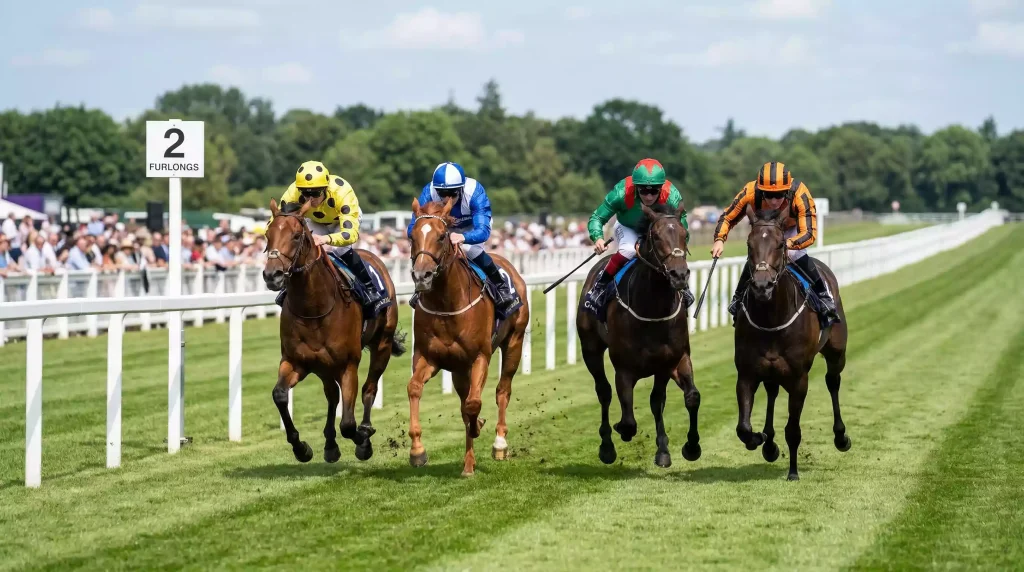
The Fitzdares Sprint Series is a ten-qualifier, one-final format that runs through Windsor’s summer flat programme, culminating in an August showdown worth £75,000. It is the only series of its kind in the British racing calendar — a structured pathway from mid-range handicaps to a high-value final, all on the same course, all over sprint distances. For punters and trainers alike, the series creates a narrative arc that standard fixture-by-fixture racing lacks: horses progress through qualifying rounds, accumulate form, and converge on a single decisive race. Ten steps to a seventy-five thousand finish.
This guide explains the structure, the final, the draw and pace factors that shape sprint results at Windsor, and how to follow the series from first qualifier to last furlong.
Fitzdares Sprint Structure: 10 Qualifiers and the £75k Final
The Fitzdares Sprint Series comprises ten qualifying races spread across Windsor’s flat season, typically from April through July, followed by the final in August. The qualifiers range in class from Class 2 (with prize funds around £30,000) down to Class 4 (around £10,800), and they are run over five furlongs and six furlongs — the two sprint distances that Windsor’s near-straight track configuration handles best.
The class range is deliberate. By including qualifiers from Class 2 to Class 4, the series attracts a broad spectrum of sprint handicappers — from horses on the fringes of Listed company down to exposed regulars who race every fortnight. This breadth ensures that the final is not simply a re-run of the highest-class qualifier but a genuine meeting of different levels, where a horse that dominated a Class 4 heat faces a Class 2 performer on altered terms. The weight adjustments in the final reflect each horse’s route through the series, creating a handicap puzzle that rewards trainers who have managed their entries strategically.
The qualifying criteria determine which horses earn a place in the August final. Placing in a qualifier — typically the first three or four — accumulates priority for a final berth, with the exact allocation depending on the number of qualifiers a horse has contested and the level of those qualifiers. Trainers who target the series from the outset can plan a campaign across multiple qualifiers, using the earlier rounds as preparation for the final. Others may enter a single qualifier opportunistically and hope that a strong performance earns a place.
The series format gives Windsor’s summer programme a competitive backbone that elevates the standard Monday or Saturday card. A qualifier at Windsor is not just another handicap — it is a stepping stone, and the results carry forward into the final assessment. For punters, this means that form from the qualifier rounds is directly relevant to the final in a way that standalone handicap form from other courses is not.
The Final: August Showdown
The Sprint Series Final carries a prize fund of £75,000 — Windsor’s richest flat handicap, exceeding every other race on the card except the Group 3 Winter Hill Stakes. The final is typically run over six furlongs in August, timed to fall near the end of the summer programme when the qualifying form has been fully established. The field is drawn from qualifying-round performers, with the BHA handicapper assigning weights that reflect each horse’s merit based on their route through the series and their wider form.
The final attracts significant betting interest. Unlike a standard handicap where the form lines are diverse and the market must weigh competing form from multiple courses, the Sprint Series Final features horses whose form is largely Windsor-specific. The market has seen these horses run on this track, at these distances, and on similar going — which means the form is more readable and the price-setting is more informed. For punters, this is both an advantage and a challenge: the advantage is clearer data; the challenge is that the market tends to be sharper, with fewer overlooked runners.
Historical winners of the final tend to be horses who have been targeted at the series from early in the season — those with two or three qualifying runs that have demonstrated consistent course form rather than one spectacular but unrepeated performance. The final rewards Windsor specialists, and trainers who understand the track’s quirks use the qualifier rounds to confirm that their horse handles the unique figure-of-eight sprint configuration before committing to the big day.
Sprint Draw and Pace at Windsor
Windsor’s six-furlong course runs almost straight — one of the least curved sprint tracks in Britain — which means the draw operates differently to courses with a tight early bend. On good or firmer ground, the draw bias over six furlongs is minimal: the straight track and the uniform surface give all stalls a fair chance. On soft ground, the picture changes. Higher stalls, drawn towards the far side of the track, gain an advantage because the far rail offers fresher turf that has taken less traffic.
The five-furlong course, using the final five furlongs of the same straight, amplifies the importance of break speed. Over five furlongs, a slow start is harder to recover from because there is less distance to make up ground, and the pace bias — front-runners winning approximately four times as often as hold-up horses at Windsor — is at its most extreme. In Sprint Series qualifiers and the final, identifying which horse is likely to lead from its stall is one of the most valuable analytical steps available.
Richard Wayman, the BHA’s Director of Racing, has provided context for why events like the Sprint Series matter. “There was much to be proud of in the sport in 2026. Attendance is growing, prize money increased at all levels. But horse population continues to decline and the betting environment remains challenging,”
Wayman wrote in the BHA’s 2026 Racing Report. The Sprint Series, with its unique format and its £75,000 final, is exactly the kind of product that gives Windsor’s programme identity beyond the standard fixture list. It creates a reason to follow the course across the summer, to track qualifying form, and to engage with the final as a genuine competitive event rather than just another handicap on another Saturday.
How to Follow the Series
Tracking the Sprint Series requires attention from the first qualifier onward. The Racing Post and At The Races both flag Sprint Series qualifiers in their race cards, making it easy to identify which races carry qualifying status. After each qualifier, note the first three or four finishers, their stall positions, their running styles, and the going — this data becomes directly relevant when the final field is assembled in August.
The most useful tracking method is a simple spreadsheet: horse name, qualifier date, distance, going, stall, finishing position, and running style. By the time the final approaches, you will have a database of Windsor-specific sprint form that no public tip sheet replicates. Horses who have placed in multiple qualifiers on varying going are the most robust final contenders; those who have won a single qualifier on extreme ground may not reproduce that form if conditions differ.
Trainer patterns are also worth monitoring. Some yards target the Sprint Series deliberately, entering horses in multiple qualifiers as preparation for the final. Others use individual qualifiers as standalone targets without the final in mind. Identifying which trainers are building toward August — and which are simply racing on the day — is an edge that the form book alone does not provide. Ten steps to a seventy-five thousand finish: the journey matters as much as the destination.
