
Berkshire Winter Million: Results, Prize Money and Festival Guide
Best Horse Racing Betting Sites – Bet on Horse Racing in 2026
Loading...
The Berkshire Winter Million is a three-day jump racing festival held jointly by Royal Windsor Racecourse and Ascot, offering a combined prize fund of £1.25 million across its 2026 edition. It did not exist two years ago. The festival was born in January 2026 after Arena Racing Company relocated The Winter Million from Lingfield Park to Windsor, rebranding it and pairing it with fixtures at Ascot to create a mid-winter event with genuine calendar weight. For punters tracking windsor race results during the National Hunt season, the BWM is now the single largest prize-money fixture on the course — a million reasons to race in January, as the organisers might put it.
What makes it worth a dedicated guide rather than a passing mention is scope. Three days of jump racing, headline chases and hurdles, a crowd that in its first year topped thirteen thousand, and a prize structure that rivals established winter festivals elsewhere in the south. This is the full breakdown: how the festival moved, what the 2026 results revealed, and what to expect from the second running in 2026.
From Lingfield to Windsor: How the Festival Moved
The Winter Million began life at Lingfield Park, where it ran as a single-venue all-weather jump festival. The concept was simple enough — stack a large prize fund into a condensed winter window and give National Hunt trainers a reason to keep their better horses ticking over in January rather than waiting for the spring festivals. It attracted decent fields and reasonable crowds, but it never quite escaped the limitations of Lingfield’s all-weather surface, which some trainers viewed as a specialist proposition rather than a mainstream trial ground.
ARC’s decision to relocate the festival to Windsor in 2026 changed the equation. Windsor offered turf — real, natural turf with the drainage characteristics of an island site — plus proximity to Ascot, which agreed to co-host fixtures across the three-day window. The rebranding to “Berkshire Winter Million” reflected that dual identity: two racecourses, one county, one consolidated prize fund. The move also aligned with ARC’s broader investment in Windsor’s jump racing infrastructure, including new drainage work and previously unused grassed areas that had been prepared specifically for National Hunt use.
Strategically, the relocation served a commercial purpose too. Windsor sits within easier reach of London and the M4 corridor than Lingfield, and its Monday Night Racing crowds had already demonstrated that the course could draw a large weekday audience. The bet — and it was a bet — was that a winter jump festival would pull comparable numbers even in January. As the inaugural results showed, that bet paid off.
BWM 2026 Results: Day by Day
The inaugural Berkshire Winter Million ran from 17 to 19 January 2026 and drew 13,170 spectators across its three days, with a total prize fund of £1.2 million. For a brand-new winter festival at a course that hadn’t staged regular jump racing in two decades, those are serious numbers. To put them in context, many established midweek National Hunt fixtures at larger venues struggle to break five thousand.
Day 1 set the tone. The Fitzdares Sovereign Hurdle, the festival’s opening feature, went to Secret Squirrel under Nico de Boinville, trained by Hughie Morrison. It was a confident front-running display — appropriate, given Windsor’s well-documented pace bias — and it gave the festival an early narrative: local-ish trainer, experienced jockey, a horse who handled the course’s peculiarities on his first visit. The supporting card was competitive, with fields averaging ten runners, a healthy indicator for a first-year event.
Day 2 shifted to Ascot, offering a contrasting experience — a different track configuration, a different crowd profile, and races designed to complement rather than duplicate the Windsor card. The split-venue format is unusual in British racing, and it asks something of both the festival’s organisers and its audience: commitment. You can cherry-pick a single day, but the full BWM experience requires treating it as a weekend event rather than a standalone fixture. Whether that model scales depends partly on how well the Ascot day establishes its own identity in future editions.
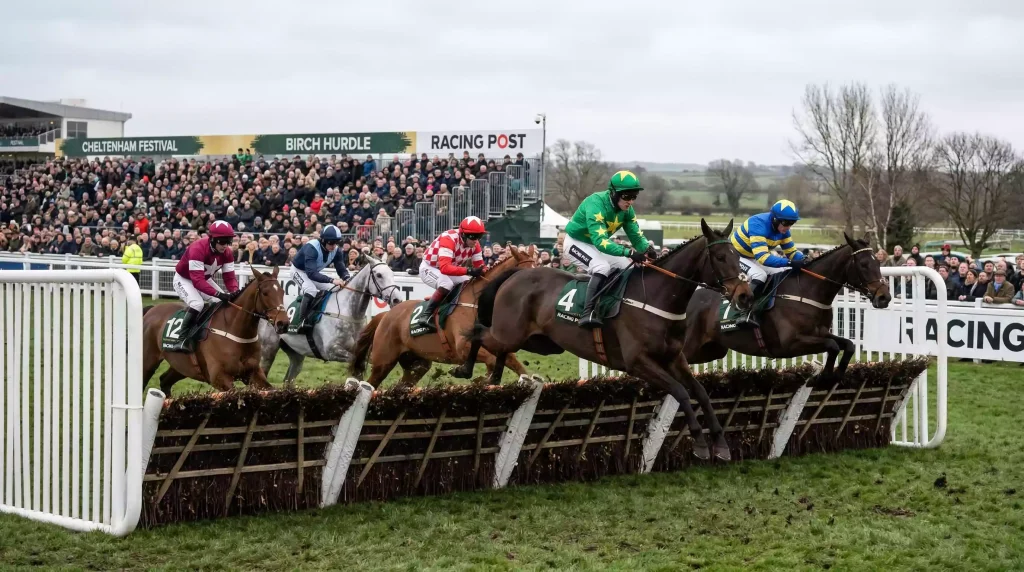
Day 3 produced the headline moment. The Fitzdares Fleur de Lys Chase, the festival’s marquee race, was won by Protektorat in dominant fashion — twenty-three lengths clear of the field, with Harry Skelton in the saddle for trainer Dan Skelton. That margin was emphatic by any measure. Protektorat, a horse with Grade 1 form, treated the Windsor fences as an afterthought, and the performance reinforced the idea that the BWM could attract horses of genuine quality rather than serving as a consolation for those not aimed at Cheltenham.
Mark Spincer, ARC’s Managing Director of Racing, had set the tone before the festival even began. “We are delighted to announce the Berkshire Winter Million Weekend. We hope that three days of racing in partnership with Ascot will become an event fans look forward to in the new year,”
he said when the festival was announced. The attendance figures and the calibre of the Day 3 winner suggested that ambition was not misplaced. Whether the BWM sustains that momentum depends on prize money, scheduling, and the willingness of top trainers to treat it as a target rather than a warm-up — but the opening salvo was convincing.
BWM 2026 Preview: Dates, Prize Money and Entries
The second Berkshire Winter Million is scheduled for 16–18 January 2026, maintaining the same mid-January slot. The prize fund has been nudged upward to £1.25 million — a modest increase from the inaugural £1.2 million, but one that signals intent rather than caution. The three-day structure remains: Windsor hosts on Friday and Sunday, Ascot on Saturday, giving trainers the option to target multiple races across the weekend without excessive travel.
The Fleur de Lys Chase returns as the Day 3 centrepiece. After Protektorat’s demolition job in 2026, the question for the second edition is whether the race can attract a deeper field — horses willing to take on a proven course winner at a venue where pace bias and the figure-of-eight track reward bold jumping. The Sovereign Hurdle anchors Day 1 again, and the supporting cards are expected to include additional conditions races aimed at novice chasers and hurdlers, broadening the festival’s appeal for smaller yards.
For punters, the BWM offers a specific advantage: it falls in a calendar window when many of the bigger yards are still finalising spring targets, meaning horses may run here closer to their best form rather than being held back. The going is typically soft to heavy in mid-January, which suits the Thames-side drainage but demands attention to ground preferences when assessing entries.
The betting market around the BWM is still maturing. In 2026, ante-post interest was modest — understandable for a festival nobody had seen before — but the strength of the results should generate earlier market activity for 2026. Keep an eye on which trainers declare early and whether the Skelton yard, emboldened by Protektorat’s romp, aims a stronger team at Windsor this time. The festival’s scheduling, a fortnight after the New Year fixtures and several weeks before the Cheltenham trials, gives it a natural window that avoids direct clashes with the biggest National Hunt days of the season.
Why It Matters for Windsor’s Identity
For most of its modern history, Royal Windsor has been a flat-racing venue — summer evenings, Monday night cards, the Winter Hill Stakes as its lone Group-level anchor. Jump racing was a memory, something the older regulars mentioned but nobody expected to return. The BWM changes that positioning fundamentally. Windsor is now a dual-code racecourse with a winter flagship event that rivals, at least in prize money, many of the established southern jump fixtures.
The commercial implications are tangible. A festival drawing over thirteen thousand spectators in January fills a revenue gap that no amount of Christmas parties or corporate hospitality can fully cover during the flat off-season. It gives the course year-round relevance in the racing calendar, which in turn supports better media coverage, stronger betting turnover on BWM days, and a reason for trainers to think of Windsor when planning their winter campaigns. Arena Racing Company operates sixteen racecourses across Britain, accounting for roughly 39% of all fixtures — but few of those venues have attempted anything as ambitious as grafting a new winter festival onto a historically summer-only track.
For the punter, the practical takeaway is straightforward: January at Windsor is no longer dead time. The BWM creates a concentrated window of high-quality jump racing where form, going, and course knowledge all matter — and where the results feed directly into the broader National Hunt narrative heading into the spring. Treat it as what it is: a genuine festival, not a placeholder, and the results will reward the attention.
There is also a broader signal here about what ARC is trying to do with the course. The investment in drainage, the figure-of-eight revert for jump racing, the appointment of a new Executive Director — these are not the moves of an operator content with the status quo. The BWM is the showpiece of that reinvention, and the clearest statement yet that Windsor intends to compete for attention beyond its traditional summer heartland.