
Arena Racing Company Operations at Windsor Racecourse
 Available in US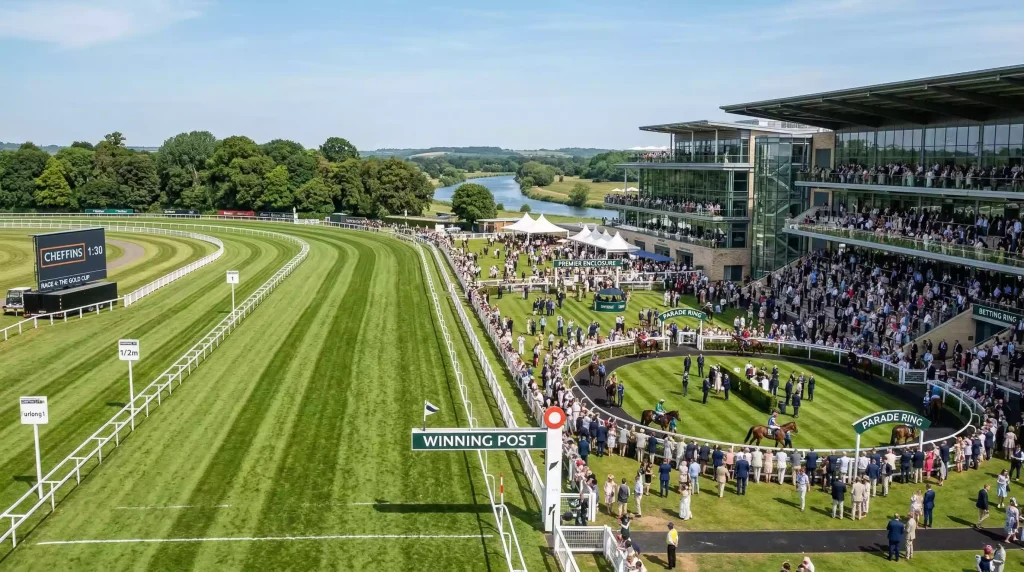
Royal Windsor Racecourse is owned and operated by Arena Racing Company — the largest racecourse operator in Britain, running sixteen venues that between them account for approximately 39% of all UK racing fixtures. ARC is not a passive landlord. It sets the fixture calendar, funds the racecourse share of prize money, invests in infrastructure, and makes the strategic decisions that shape what Windsor is and what it becomes. The company behind the course matters because every significant change at Windsor in recent years — the jump racing return, the Berkshire Winter Million, the Venues of Excellence designation — has been an ARC decision.
This guide explains ARC’s scale and structure, Windsor’s specific role within the network, and what corporate ownership means for racegoers and punters.
Arena Racing Company Scale and UK Venue Structure
Arena Racing Company operates sixteen racecourses across England and Wales, including Windsor, Lingfield Park, Doncaster, Wolverhampton, and Chepstow. The network spans flat and jump venues, all-weather and turf, urban and rural courses. Collectively, ARC venues host roughly 39% of all British racing fixtures — a market share that gives the company significant influence over the national racing calendar, fixture allocation, and media rights.
ARC draws approximately 1.2 million spectators per year across its venues and holds a stake in Sky Sports Racing, the broadcast channel that carries live coverage from many ARC fixtures. This vertical integration — owning both the racecourses and a share of the broadcasting platform — gives ARC control over its media exposure in a way that independent racecourses cannot replicate. Sky Sports Racing reaches roughly fourteen million UK households, providing a commercial foundation that supports prize money, sponsorship, and the long-term viability of the ARC fixtures programme.
The scale of the operation creates both advantages and tensions. The advantages are financial: ARC can cross-subsidise venues, invest in infrastructure from a larger capital base, and negotiate media rights collectively rather than course by course. The tensions are competitive: some within the racing industry argue that ARC’s dominance of the fixture calendar gives it disproportionate influence over the timing and class distribution of British racing, potentially at the expense of independent courses that compete for the same pool of horses and trainers.
Windsor’s Role in the ARC Network
Within ARC’s portfolio, Windsor occupies a specific niche: a dual-code course in the affluent Thames Valley with a strong summer evening programme and a growing winter identity. The course was admitted to ARC’s Venues of Excellence programme in 2026, a designation that signals a hospitality and operational standard above the network average. The appointment of Jimmy Wallace as Executive Director ahead of the inaugural Berkshire Winter Million reinforced the investment in professional management at a venue ARC clearly considers a priority.
The jump racing return is the most visible expression of ARC’s strategic ambitions for Windsor. “We have long wanted to bring jump racing back to Windsor and are delighted to confirm our plans well ahead of the first fixture in December 2026,”
said Mark Spincer, ARC’s Managing Director of Racing, in the official announcement. ARC invested in drainage and track preparation to make the return possible, and the subsequent figure-of-eight revert in November 2026 reflects a willingness to iterate — to try a configuration, gather feedback, and adjust — that is characteristic of a corporate operator with the resources and appetite for medium-term development.
The Berkshire Winter Million, co-hosted with Ascot, positions Windsor as a winter destination in a way that none of ARC’s other southern venues currently attempt. Lingfield Park — another ARC course — previously hosted the Winter Million on its all-weather surface, but the relocation to Windsor’s turf track was a deliberate upgrade in ambition and scale. Within the ARC network, Windsor is being positioned as a flagship venue rather than a workhorse — a course whose profile is expected to grow, not merely maintain.
Fixture Allocation and Prize Money
Windsor’s twenty-six annual fixtures are allocated through a process that involves both ARC and the BHA, which oversees the national fixture list. The allocation reflects the course’s capacity to stage competitive racing across both codes: thirteen Monday Night Racing evenings form the summer backbone, supplemented by additional flat meetings and the growing jump programme from November through January. The total of twenty-six is higher than it was five years ago, driven primarily by the addition of National Hunt fixtures.
Prize money at Windsor is funded through the standard three-pillar structure: the racecourse contribution (paid by ARC from gate receipts, hospitality revenue, and media rights income), the Horserace Betting Levy Board allocation, and supplementary funding from sponsors. The Winter Hill Stakes at £70,000 and the Sprint Series Final at £75,000 are the biggest individual prize pots, but the aggregate prize money across twenty-six fixtures represents a significant commitment from ARC — and one that has grown in line with the national record of £194.7 million in total UK prize money in 2026.
For punters, the prize money level matters because it determines field quality. Higher prizes attract better horses, more competitive fields, and more information-rich results. Windsor’s position within ARC’s investment priorities suggests that prize money will continue to grow, particularly for the BWM and any new feature events introduced as the jump programme matures.
What ARC Ownership Means for Racegoers
The practical experience of visiting an ARC-operated racecourse includes certain standardised elements: ticketing systems, loyalty programmes, hospitality templates, and a consistent approach to marketing and communications. Windsor benefits from this infrastructure — the booking process is smooth, the digital presence is polished, and the operational basics (car parking, crowd management, food and drink) are handled to a professional standard. Whether the standardisation enriches or homogenises the experience is a matter of taste.
Critics of ARC’s approach argue that corporate ownership strips racecourses of their individual character, replacing local identity with a franchise model. The concern is that the uniformity of the ARC experience — the same ticketing platform, the same hospitality templates, the same digital marketing — flattens the distinctions between venues. Supporters counter that the investment ARC brings — the jump racing return, the BWM, the drainage work, the Venues of Excellence programme — would not have happened under a less resourced operator. The scale of capital required for projects like the jump racing infrastructure at Windsor is beyond the reach of most independent racecourse operators, and ARC’s ability to fund and manage such projects is a direct benefit of corporate ownership.
The reality at Windsor sits somewhere between these positions: the course retains its distinctive character (the figure-of-eight, the island, the Monday evenings) while benefiting from the financial and operational heft of a large corporate parent. The question is whether the ARC model ultimately enriches or constrains that character — and the answer may vary depending on which aspect of the racecourse experience you value most.
For the racegoer, the company behind the course is largely invisible on race day. You notice the racing, the atmosphere, the going, the view. The corporate structure matters most when it drives decisions — new fixtures, investment, prize money — that shape the experience over time. At Windsor, those decisions have been consistently ambitious. The company behind the course is building something, and the results are visible on and off the track.
