
Today’s Windsor Non-Runners: Live Withdrawals and Rule 4
 Available in US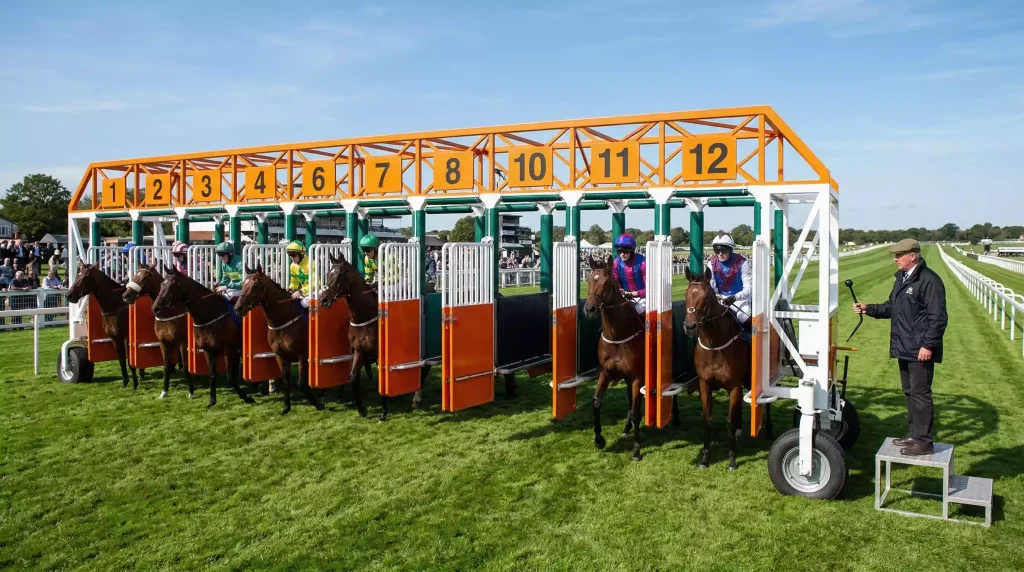
A non-runner at Windsor is never just one horse removed from a field. It is a recalculation — of the draw, of the pace, of the market, of every remaining runner’s chance. On a course where stall position matters more than at most British tracks and where front-runners dominate the results, the withdrawal of a single horse from a sprint can flip the competitive dynamics entirely. A non-runner changes everything around it, and understanding how is the difference between adapting to new information and ignoring it.
This guide covers why horses are withdrawn, how Rule 4 deductions affect your returns, what a withdrawal means for draw bias and market structure at Windsor, and where to check for windsor racecourse non runners today before the first race.
Common Reasons for Official Windsor Horse Withdrawals
The most common reason for a withdrawal is a change in going. If the ground dries out or softens overnight beyond what a horse’s connections consider suitable, the trainer may decide the conditions no longer favour their runner. At Windsor, where the Thames-side drainage produces ground that can shift from soft to good-to-soft more quickly than at many inland courses, trainers sometimes withdraw horses on the morning of the fixture after inspecting the going report — even when the forecast had suggested conditions would hold.
Injury and illness are the second major category. A horse that scoped poorly, showed heat in a leg during morning exercise, or simply failed to eat up may be withdrawn on veterinary advice. These withdrawals are typically announced early and carry no disciplinary implications for the connections. The BHA requires trainers to provide a reason for withdrawal, and the reason is publicly recorded — though the level of detail varies from a specific veterinary finding to the generic “not in the best form.”
Owner decisions, tactical withdrawals, and transport issues account for the remaining non-runners. A trainer may withdraw a horse if a preferred engagement at another course becomes available on the same day, or if a key rival has been declared that shifts the competitive picture. These tactical withdrawals are legal provided they are declared within the permitted timeframe, but they contribute to the broader challenge facing British racing: the number of horses in training fell to 21,728 in 2026, a decline of 2.3% from the previous year, with the BHA projecting a further 6–7% drop in total starts by 2027. Smaller horse populations mean smaller fields, and smaller fields mean each non-runner has a proportionally larger impact on the remaining runners.
Veterinary inspections on the morning of the fixture can also generate non-runners. Horses may be withdrawn by the racecourse vet before the first race if they show signs of lameness, respiratory issues, or any condition that could compromise welfare during competition. These late withdrawals are disruptive because they occur after punters have already assessed the card, but they are non-negotiable — animal welfare takes precedence over the betting market.
Rule 4 Deductions: What You Need to Know
When a horse is withdrawn from a race after the final declaration stage, Rule 4 of the Rules of Racing may apply. Rule 4 allows bookmakers to make a deduction from winning bets to compensate for the removal of a runner that was part of the market. The deduction is based on the starting price the withdrawn horse would have had: the shorter its expected price, the larger the deduction from your winnings.
The scale ranges from 5p in the pound for a horse priced at 10/1 or longer to 90p in the pound for an odds-on favourite that is withdrawn. In practice, most Rule 4 deductions at Windsor fall in the 10p to 30p range, because the removed horse is typically a mid-market runner rather than a short-priced favourite. The deduction applies to all bets placed before the withdrawal was announced, regardless of whether the bet was placed at a fixed price or at SP.
Rule 4 does not apply if the horse was withdrawn before the final declaration stage, because the market had not yet formed around that runner. It also does not apply if you placed your bet after the withdrawal was publicly confirmed — by that point, the market has already adjusted. The practical implication is timing: if you back a horse early and a rival is later withdrawn, your payout may be reduced even though your selection’s chance has improved. Checking for non-runners before placing bets is one way to avoid unpleasant surprises, though in the case of late morning withdrawals, the timing may leave no window to adjust.
How Non-Runners Affect Draw and Market
At Windsor, the draw impact of a non-runner is particularly acute in sprints. Consider a sixteen-runner six-furlong handicap on soft going, where high stalls carry the advantage. If two horses drawn in stalls 14 and 16 are withdrawn, the remaining high-drawn runners lose part of their group advantage — they are now more isolated on the far side, with fewer horses around them to maintain the momentum of the far-side group. The draw bias may still favour high numbers, but its magnitude has shifted.
In the Winter Hill Stakes, draw data shows that stall 1 has won five times in the last thirteen runnings, with stall 2 adding two more victories — over half of all winners from the two innermost stalls. If a horse drawn in stall 1 is withdrawn, the next-lowest draw inherits some of that positional advantage, but the specific geometry of the approach to the rail changes. The market should adjust; whether it adjusts enough is where opportunity lies.
Price movements after a non-runner announcement follow a predictable pattern. The withdrawn horse’s odds disappear, and the market firms — remaining runners shorten because they now share the probability that was allocated to the withdrawn horse. The extent of the shortening reflects the market’s assessment of how the withdrawal changes the race. If a confirmed front-runner is withdrawn and the race loses its expected pace-setter, hold-up horses may shorten more than other speed types, because the pace scenario has shifted in their favour. At Windsor, where pace is the dominant factor, this redistribution is often larger than at tracks where running style matters less.
Where to Check for Non-Runners
The BHA’s official website publishes non-runner declarations as they are confirmed, and this is the authoritative source. Both the Racing Post and At The Races update their race cards to reflect withdrawals in near real-time, and these are the most practical platforms for most punters because they integrate the non-runner information directly into the card you are already using to assess the race.
The official Windsor Racecourse website also reflects non-runners, though it may not always be the fastest to update. For those using betting apps, most major bookmakers flag non-runners within their race card interfaces and adjust the market automatically — though the speed of adjustment varies between operators. If you are at the course, the on-site announcement board and the public address system will confirm non-runners before each race.
The key window is the morning of the fixture, between 8 AM and approximately ninety minutes before the first race. Most going-related withdrawals are confirmed by mid-morning, while late veterinary withdrawals may not be announced until the pre-race inspection. Checking twice — once mid-morning and once shortly before the first race — is the minimum discipline for anyone planning to act on today’s card at Windsor.
